Commercial Roofing in Johnson, AR
Keep the roof decision connected to the building below it. We help Johnson property owners work through leaks, restoration options and roof replacement.
Commercial roof decisions for Johnson buildings
A leak above a tenant’s space needs attention to more than the spot where water appears. The roof material, the condition of the insulation beneath it and the route water takes to a drain all affect the repair.
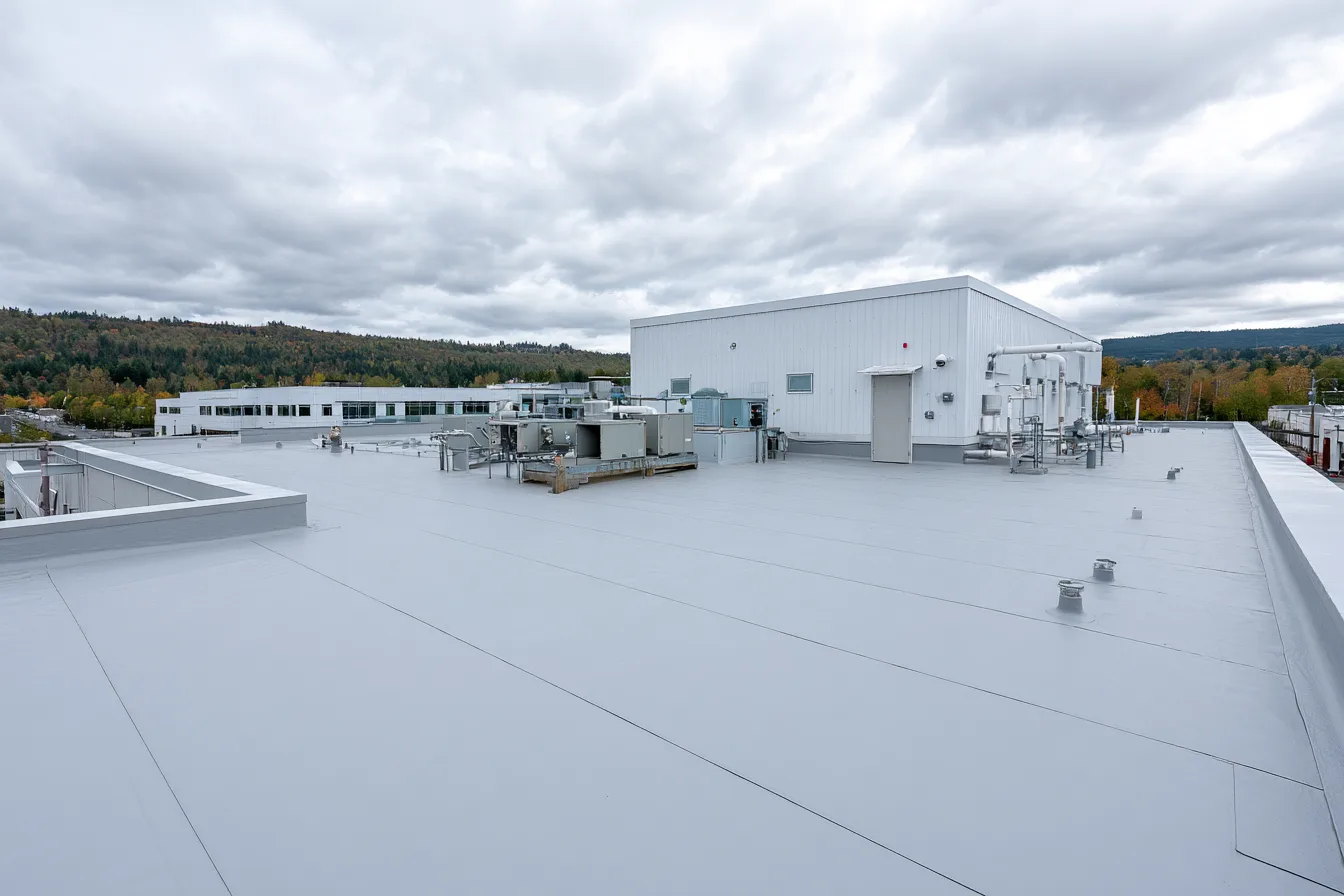
We look at the existing system before choosing the work. On a membrane roof, seams, curbs, drains and perimeter flashings interrupt the open surface. A defect at one of those details can be repairable while the surrounding roof remains useful. Moisture trapped below that surface or failed attachment changes the question.
Tell us how the building is used, where water is appearing and how the roof is accessed. Those details help put the roofing work into a plan that accounts for the people, equipment and entrances below.
Commercial roofing systems and services
Choose a system or the work the building needs. Each page develops the installation, repair and operating considerations for that roof.
TPO Roofing
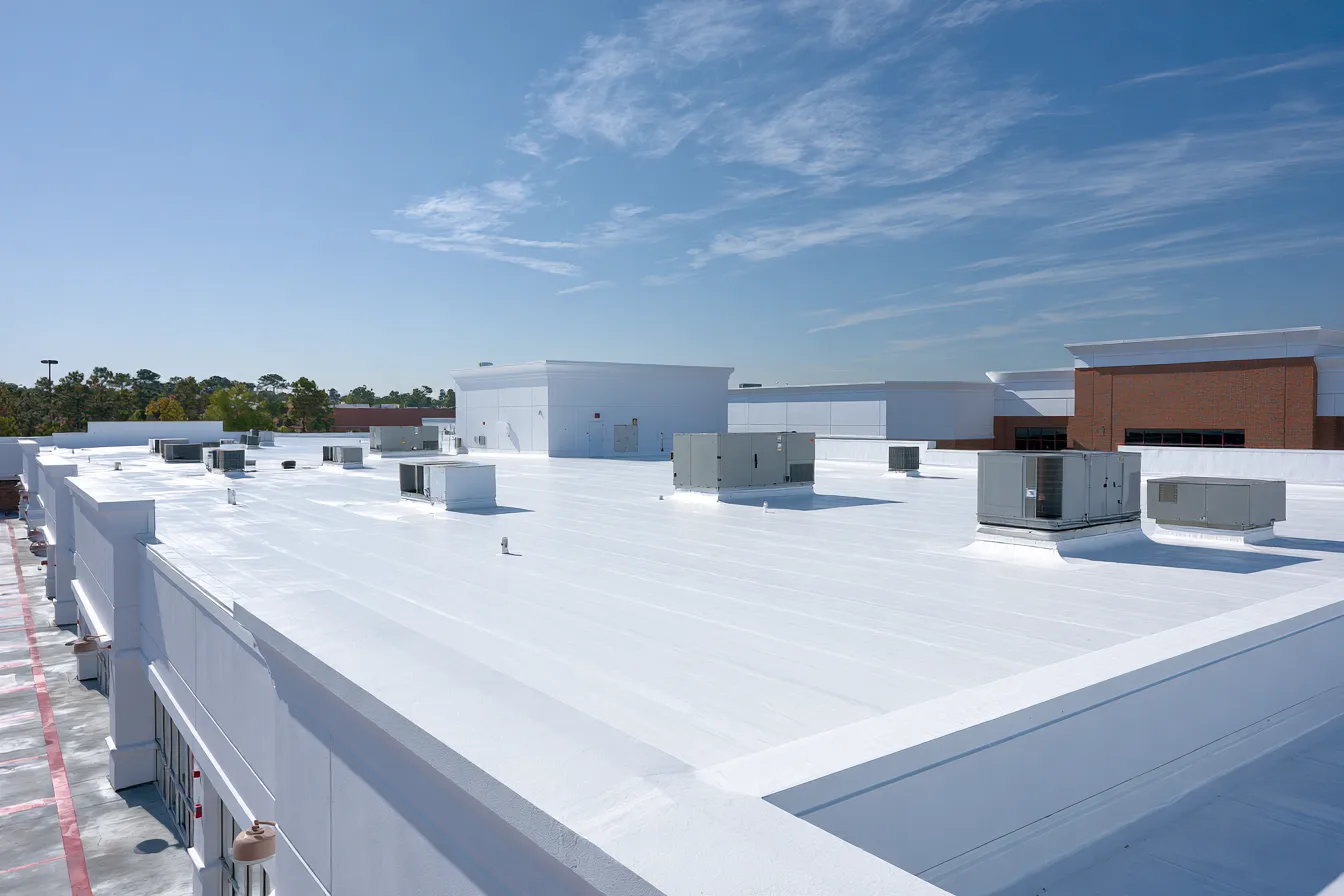
A welded single-ply membrane, with seams, edges and equipment curbs planned as one assembly.
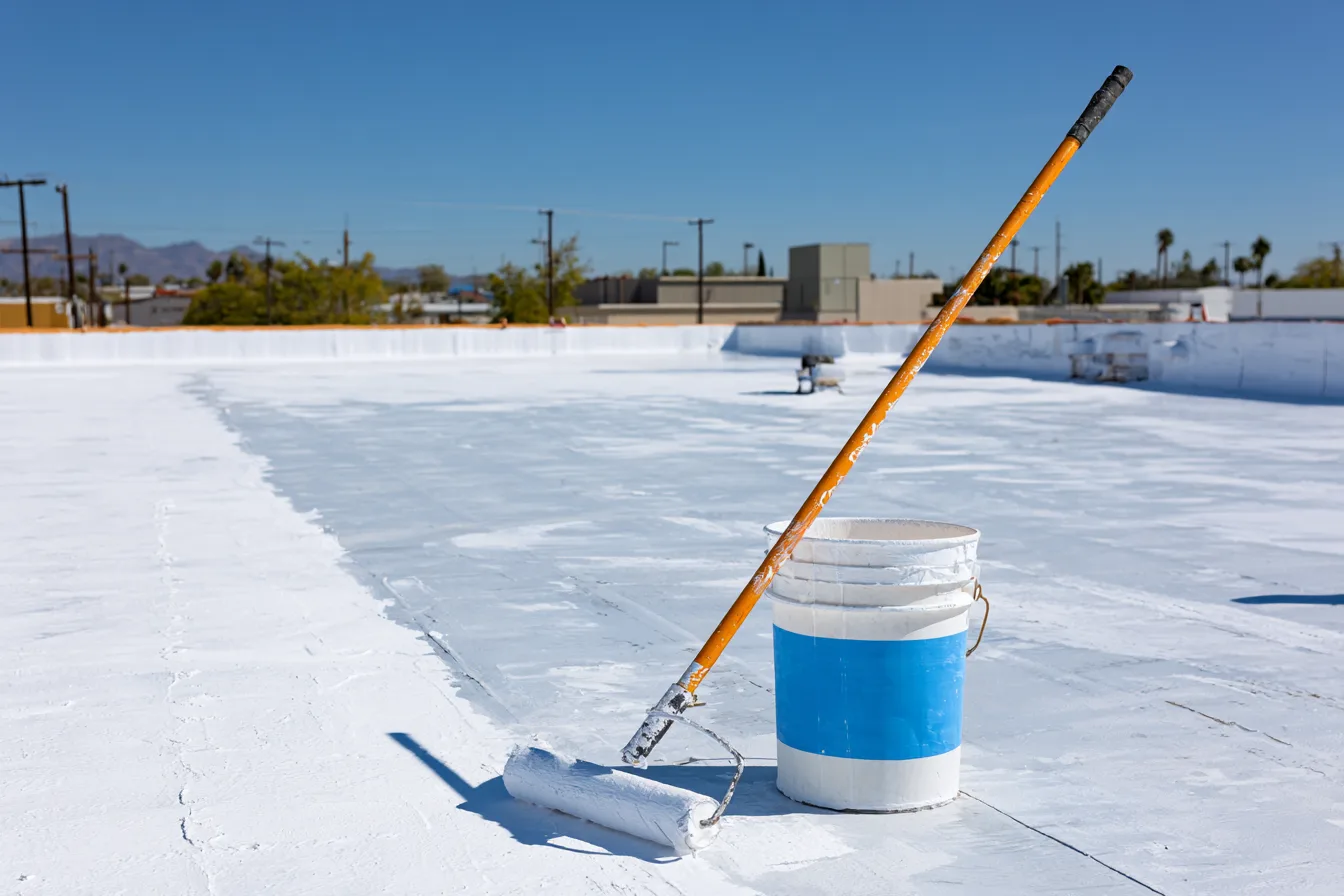
Roof Coatings
Find out whether a dry, well-attached roof can support a restoration system.
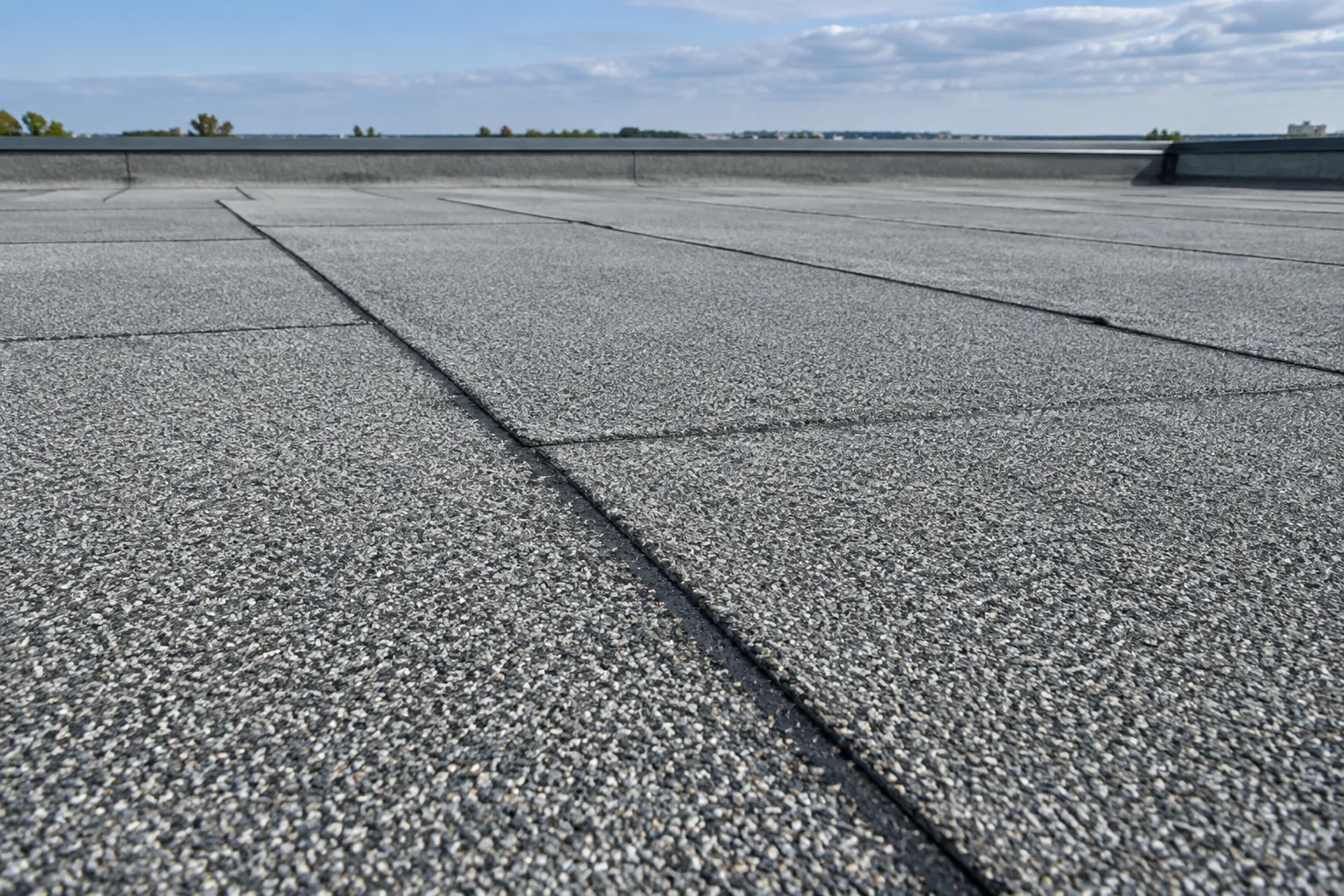
Flat Roof Repair
Repair the failed seam, drain or flashing with material compatible with the existing roof.
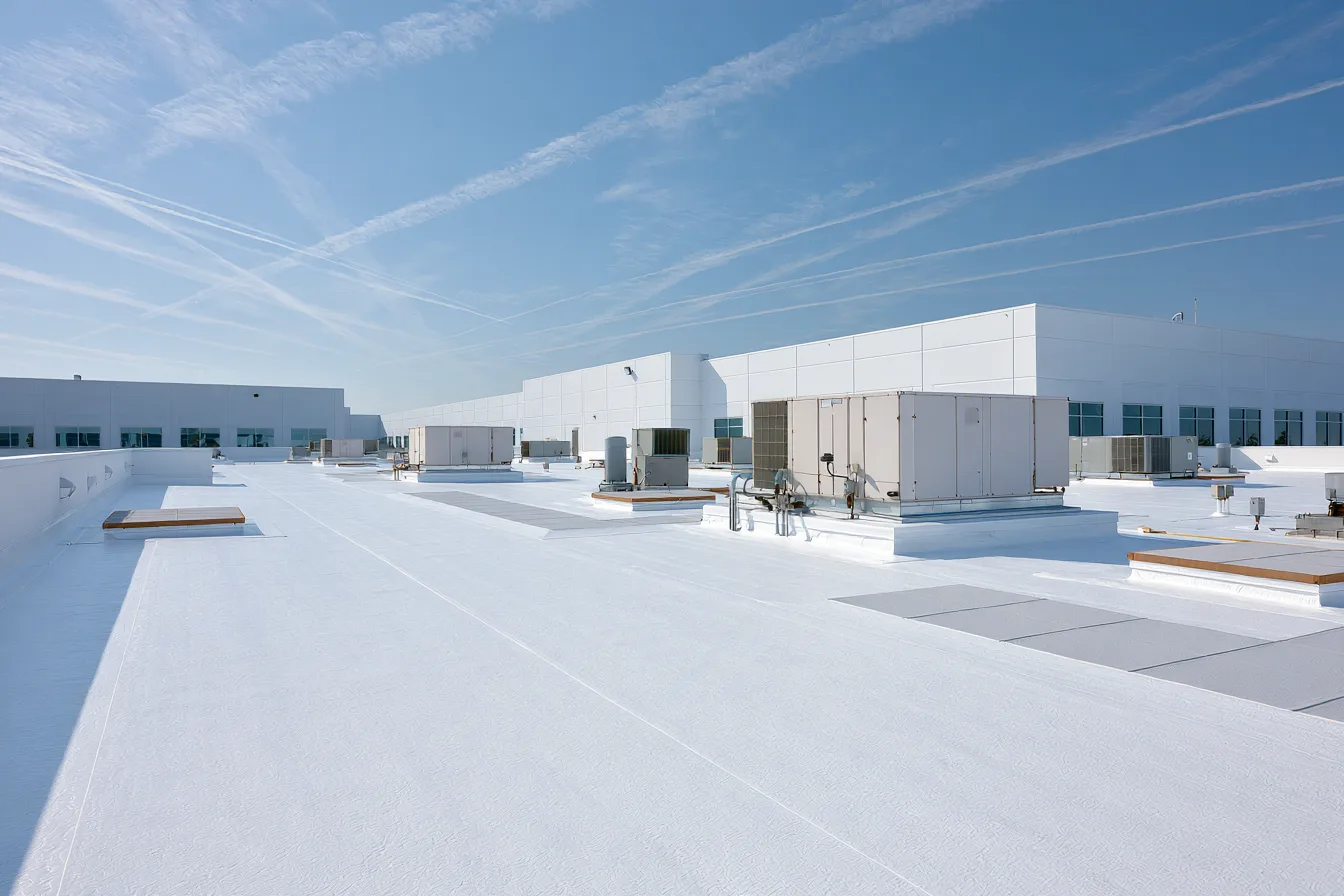
Flat Roof Replacement
Replace failing layers and address drainage, insulation and operations together.
Repair, restore or replace a commercial roof
A new surface is useful only when the assembly beneath it can support the intended work.
Drainage and rooftop equipment change the work
Low-slope roofs move water through a designed drainage route. The inspection looks at how that route meets the details and equipment on your building.
Drains, scuppers and low areas
Debris can obstruct an outlet; settled insulation or deck deflection can leave water behind even with a clear drain. Those are different problems. Cleaning an outlet does not correct a low area, and a coating does not create the missing slope.
Equipment curbs and penetrations
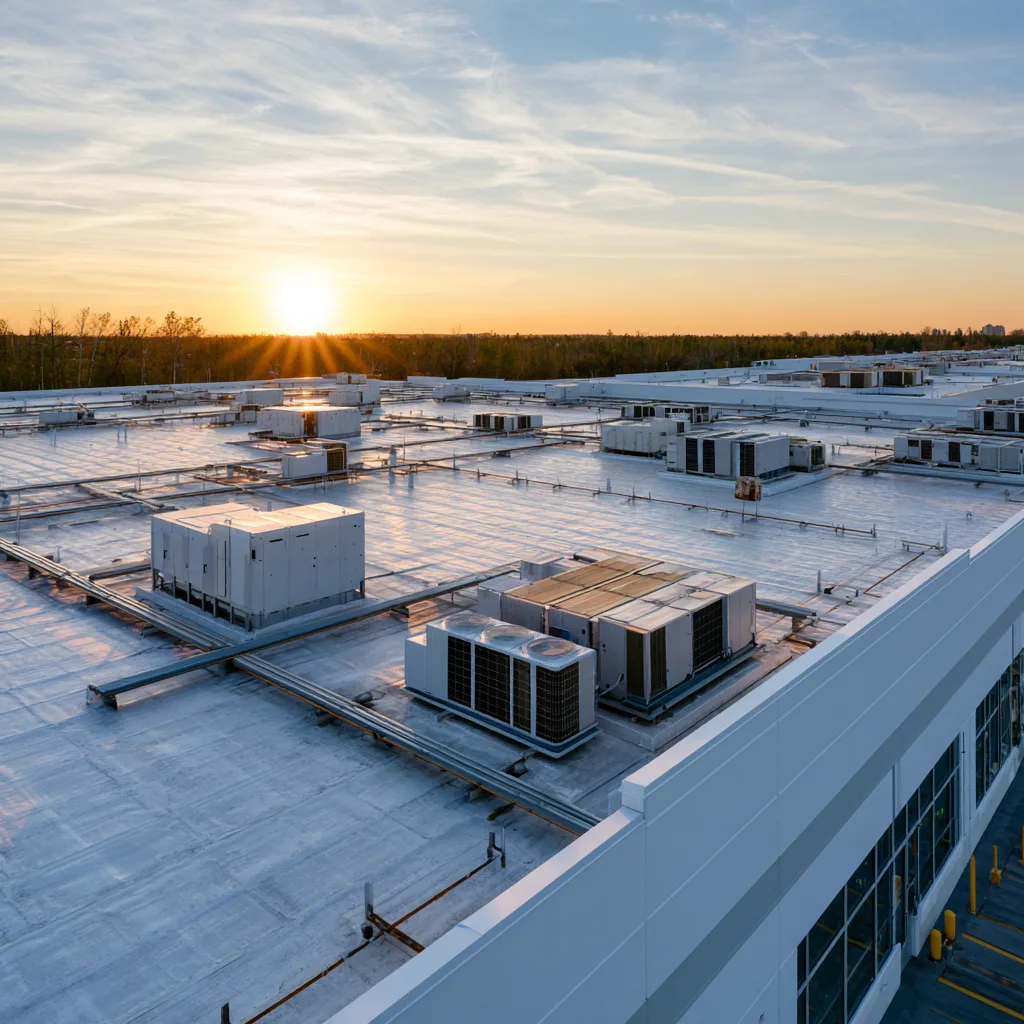
Membrane must connect to the raised curbs beneath rooftop units and to pipes crossing the roof. Corners, terminations and changes of material need compatible details. Water near an air-conditioning unit can also come from the unit or its condensate line, requiring the appropriate mechanical work.
Perimeters and access paths
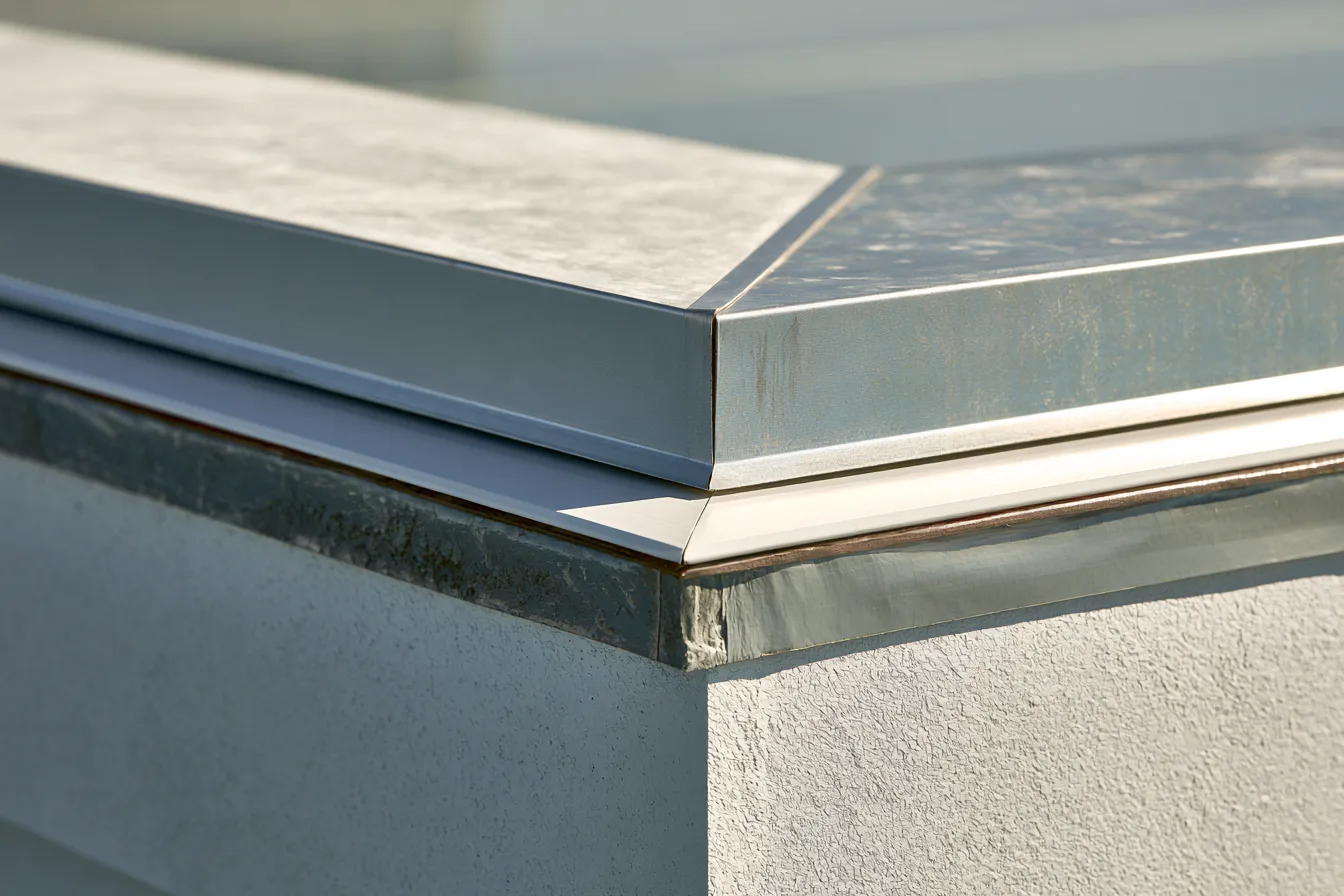
Edge metal, parapet coping and wall flashings protect the roof where the surface ends. Service traffic can also puncture or wear roofing. The repair plan accounts for those connections and the routes used to reach equipment.
Layers that cannot be seen from above
A clean-looking membrane does not establish that the insulation below is dry. Where findings call for further moisture investigation or test openings, those results inform repair, recover or replacement decisions before new material conceals the problem.
Plan roof work around the building
The scope and sequence should suit the occupied building as well as the roof system.
Define access and affected space
Identify roof access, tenant entrances, sensitive work areas, loading routes and equipment that needs to remain reachable. Include who can authorize work and coordinate with occupants.
Choose the work and its sequence
Plan material movement, removal, weather protection and the area opened at each stage. Equipment, electrical or mechanical work needs coordination with the appropriate trade.
Keep the finished system maintainable
The roof needs usable drainage outlets and sensible access to equipment. Material records and the actual warranty terms help future maintenance and repair decisions; the offering contractor or manufacturer sets those terms.
Johnson commercial roofing FAQs
Is a commercial roof inspection free?
Yes. Start with a free inspection. Tell us the roof access arrangements and the building’s use so the roof walk can be planned sensibly.
Can a coating go over wet insulation?
A coating is not a repair for wet insulation. The moisture source and affected layers need to be addressed before the roof is considered for restoration.
Can roofing work be planned around tenants?
Yes. Entrances, occupied areas, equipment and working hours are part of planning the work. The actual roof condition and weather protection needed determine what can be opened and when.
Is a leak near rooftop equipment always a roofing problem?
No. Roof flashing, equipment cabinets, condensate lines and plumbing can produce water in nearby areas. We address the roofing part and identify when the appropriate equipment trade needs to resolve another source.